Welcome to the Human-centered Artificial Intelligence (HCAI) group at the Linz Institute of Technology , Artificial Intelligence Lab and the Multimedia Mining and Search (MMS) group at the Institute of Computational Perception of the Johannes Kepler University Linz .
Mission
AI technology permeates more and more aspects of our daily life. Considering human factors in the development of corresponding algorithms and systems is therefore a timely and highly important research topic, which is unfortunately often neglected in the more technically driven AI communities.
In our group, we elaborate methods and algorithms to create AI technology that puts the human in focus instead of adopting a purely system-centric perspective. Among others, we elaborate comprehensive user models, develop personalization techniques for search and recommender systems, and conduct studies on human–technology interaction. Furthermore, our research aims at uncovering data, algorithmic, presentation, and cognitive biases, and at ensuring transparency and fairness of machine learning algorithms.
Research Areas
Recommender Systems
Recommender systems suggest to their users relevant items from huge catalogs containing, for instance, products, jobs, movies, or songs. To achieve this, recommender systems leverage historical user-item interactions, content-related information, or contextual data to create ranking models using techniques such as collaborative filtering, content-based filtering, and deep neural networks. Our group's aim is to devise recommendation algorithms that not only achieve high accuracy, but also improve robustness, diversity, novelty, fairness, explainability, and privacy.
Natural Language Processing
Processing and understanding natural language is a challenging area of research at the intersection of computational linguistics, computer science, and machine learning. It is concerned with tasks such as machine translation, text summarization, and hate speech detection. Advancements in deep learning, most notably, large language models, have added a promising perspective, but also many new topics and questions. Our group conducts fundamental research on deep learning models for natural language processing (e.g., aiming to make models more efficient or less biased) as well as applied research (e.g., methods for health and medical language processing or diagnostic tools for retrieval-augmented generation).
Multimedia Processing and Retrieval
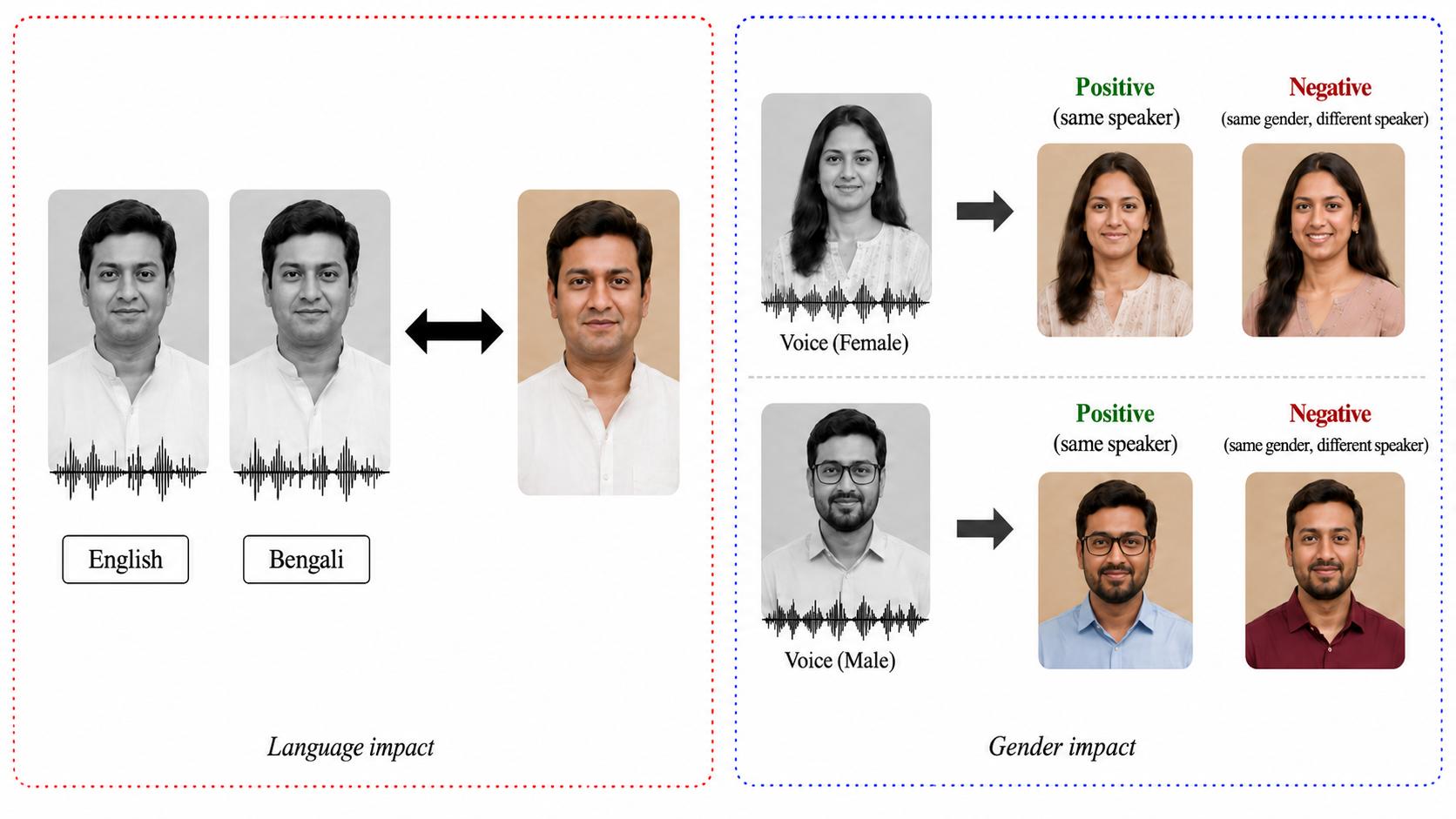
This research area addresses the challenges of processing, analyzing, indexing, and retrieving multimodal data objects, where modalities may include text, audio, image, and sensor signals such as RaDAR or LiDAR. Our group's research spans diverse topics, including deep learning-based methods for multimodal representation learning, emotion recognition in multimodal data streams, and cross-media alignment and retrieval. The latter enables video content to be searched via natural language queries, or a person's face and voice to be associated with each other in missing-modality scenarios.
Psychology-informed Information Search
Intertwining computer science and psychology research, our group studies how psychological constructs and models pertaining to personality, mood, emotion, perception, or cognition can be integrated in information search processes, for instance, using recommender systems, search engines, or generative AI technologies such as multimodal large language models. This includes creating machine learning algorithms to predict preferences, emotions, intents, and behaviors from user-generated data. A recent focus lies on the study of cognitive effects and biases in large language models and recommender systems.
Trustworthy and Ethical Artificial Intelligence
This research area focuses on devising strategies and methods to ensure that AI systems are responsible, transparent, non-discriminatory, secure, and privacy-preserving. Our group creates AI technology that reduces algorithmic biases, ensures fair and understandable outcomes, and establishes mechanisms for robustness, privacy, and accountability. Our goal is to align AI behavior with societal values and ethical norms, thereby building trust in AI technology.
FWF projects HCAI and Bilateral AI
Our group is a member of the FWF doc.funds.connect research and education program Human-centered Artificial Intelligence and the FWF Cluster of Excellence project Bilateral Artificial Intelligence .